A certification standard written for stainless steel
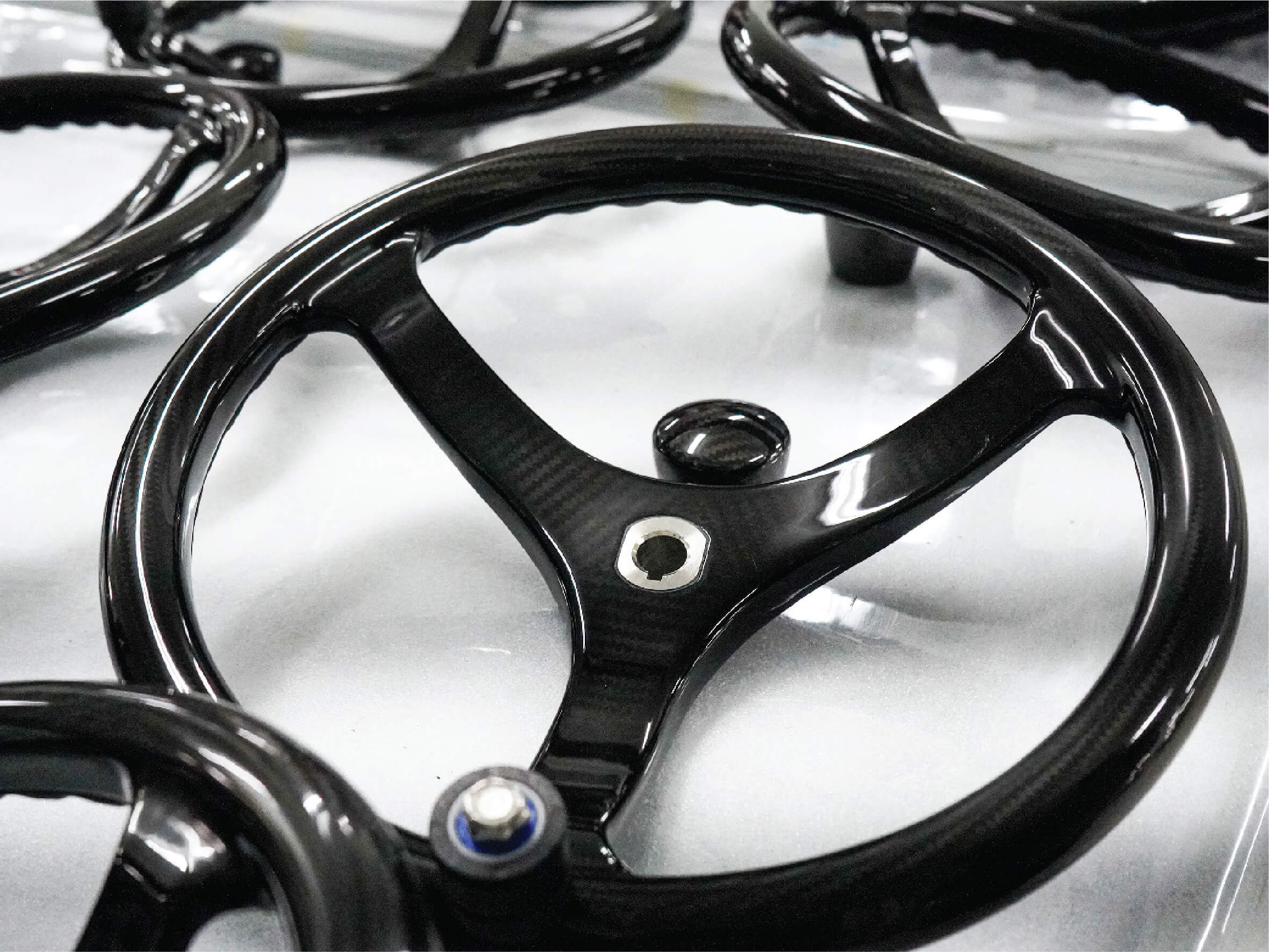
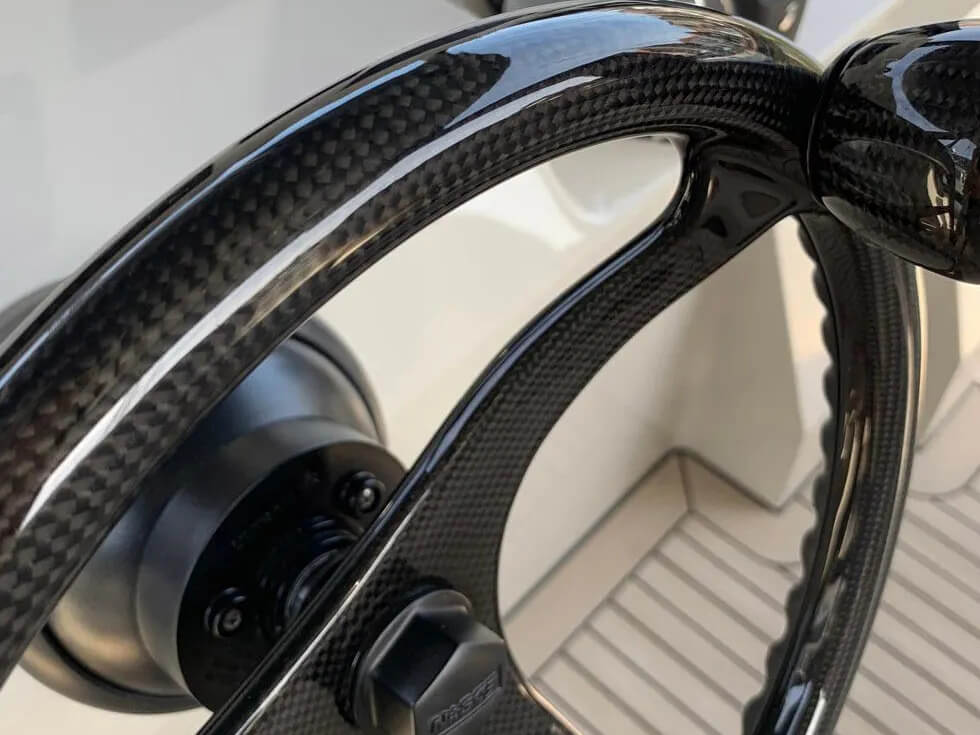
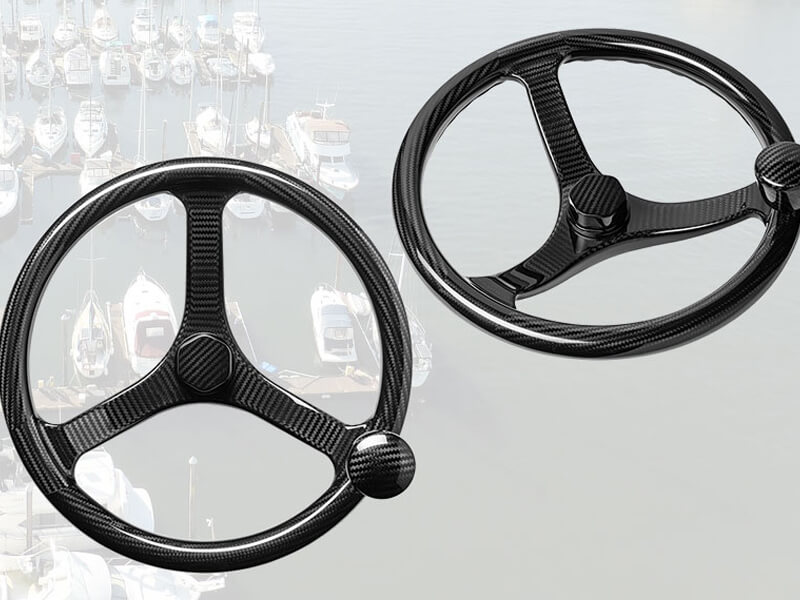
Schmitt Marine wanted to open a new carbon fibre product line, and stainless steel steering wheels are their largest range. They came to us looking for a new carbon fibre alternative. The project scope was relatively simple. We redeveloped an existing stainless steel wheel, transforming it into a carbon fibre wheel that would pass NMMA and CE certification for the US and European markets. The product had to be developed considering scalable production techniques ready for a handover to an OEM (Original Equipment Manufacturer).
Read more
Read less
The main challenge with this project was ensuring the steering wheel would meet certification standards. Carbon fibre marine steering wheels were rare at the time, and few had passed certification processes. The standards we had to adhere to were developed for stainless steel and were not particularly applicable to carbon fibre.
The most difficult requirement to meet was the impact test, which simulates a torso striking the wheel. An 80 kg weight swings into the weakest part of the wheel twice: one strike delivering around 160 joules, the second around 270 joules. To pass, the wheel can bend but not shatter; it must stay anchored to the helm shaft, and it has to remain usable as a steering wheel afterwards.
Making the wheel is one thing, certification is another
This was the first major client project I worked on professionally. I was exposed to working with global clients and learnt about designing and manufacturing products at scale. The majority of my involvement was in the hands-on, foundational work. I was cutting the templates, manufacturing prototype wheels, and sanding. So much sanding. I wasn't making any big project decisions yet, but I was in the room for all of them and understood the reasoning, and that education shaped how I've run projects since.
Read more
Read less
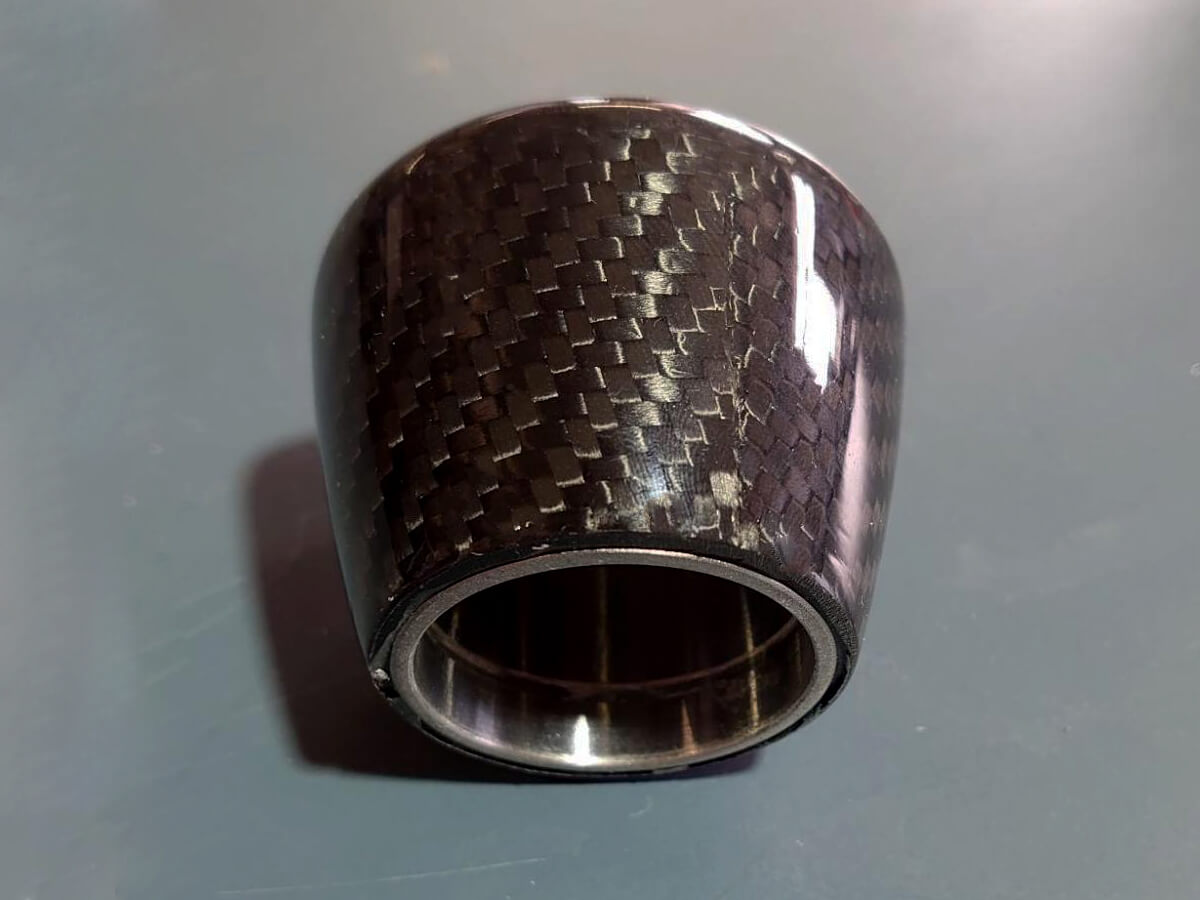
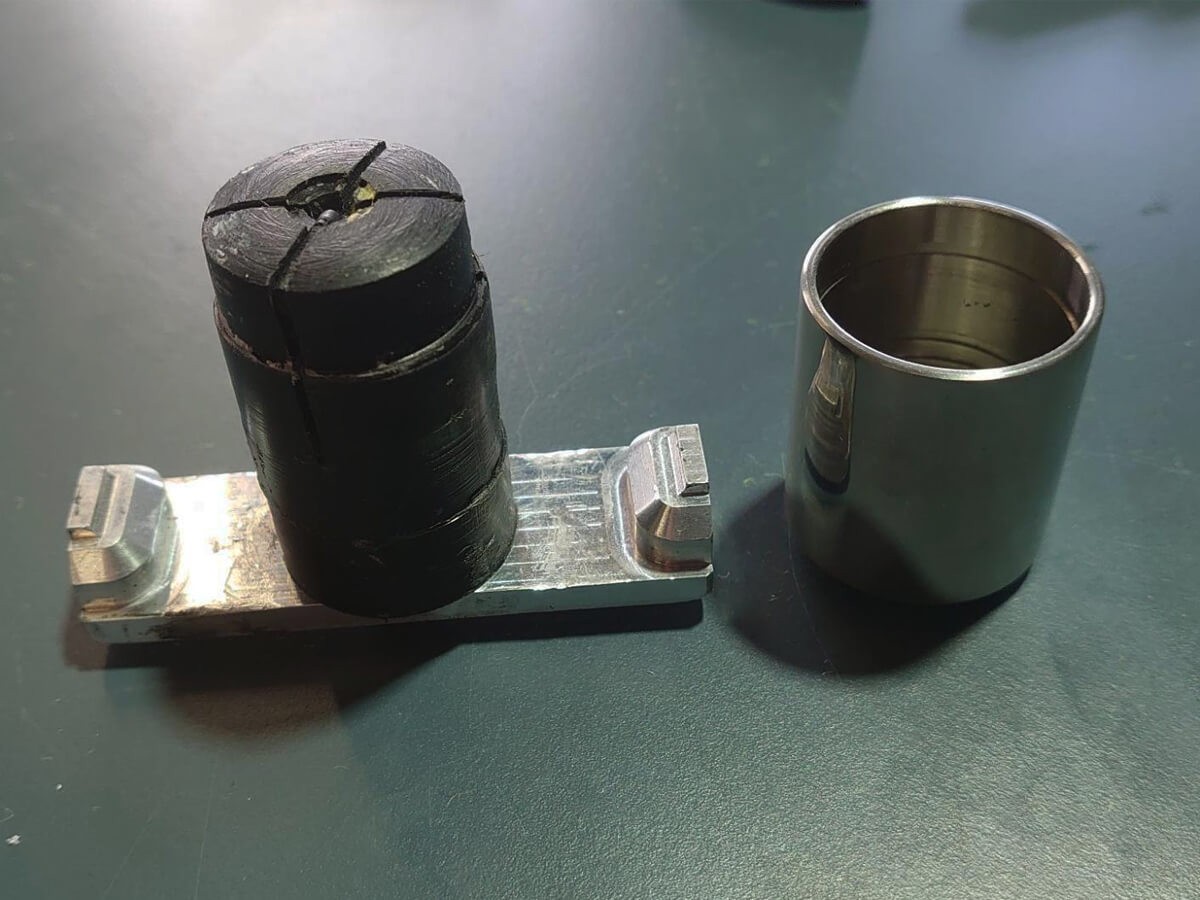
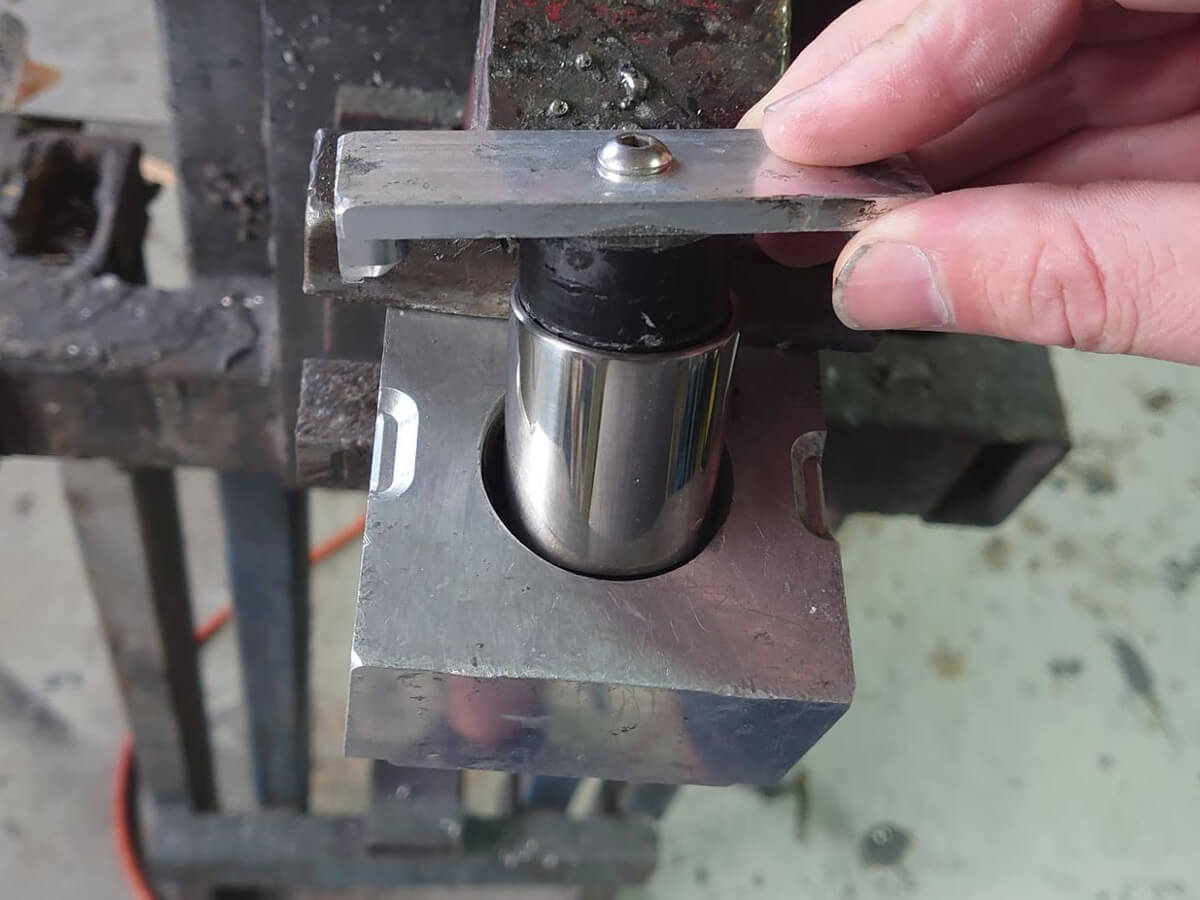
A significant technical contribution I made to the project was CAD modelling the tooling needed to manufacture the wheel’s carbon fibre knob and nut. I designed small trapped rubber tools to make carbon skins that would be bonded to stainless steel parts carrying the threads and mounting hardware. A challenge with the tooling design was being able to repeatedly produce the components. The tool had to produce the skin, release the silicone, then reload the cured skin with an alignment jig holding the steel part centred for bonding. Repeatability was particularly difficult to achieve for the knob tool as the knob spins on a bearing, and any offset shows up the moment it turns. To achieve consistent repeatability of the parts, I designed a cavity on either side of the tool, and a bar that the steel part bolted onto that would hold the part centred inside the skin.
The certification test was a stressful part of the project. We knew traditional carbon fibre construction would likely not pass, and we didn't want to manufacture parts and send them off to be tested by the certifying facility for time and money reasons, so we decided to replicate the test in-house. The client supplied a video of the official rig, and I got the job of building ours.
The first problem was how to safely swing the mass. Suspending 80 kg from the workshop ceiling and swinging it around didn't seem safe to me, so I reconsidered what we were actually trying to achieve. Less weight and more height would achieve a similar striking energy. We had silicon carbide sand available in the workshop, and after some calculations (E = mgh), I worked out I needed 20 kg of sand to achieve the required energy with a safe swing height. To get the amount of energy required, we had to raise the bag about 800 mm above the impact point for 160 joules, and 1400 mm for 270 joules. We bolted the wheel, just off the floor, to a steel shelving unit anchored to the floor, and swung away. It worked a treat.
As we ran through the testing using the sand bag rig I developed, it became clear why it was crucial for product certification. An early-generation wheel, made with carbon prepreg over Expancel core, was an outstanding product that delivered on the functional and aesthetic aspects of the scope. It was an amazing first part with an incredible finish straight from the tool, weighed next to nothing, and when my boss and a colleague dared me to stand on it, it didn't even flex. The sand bag test rig, however, absolutely obliterated it.
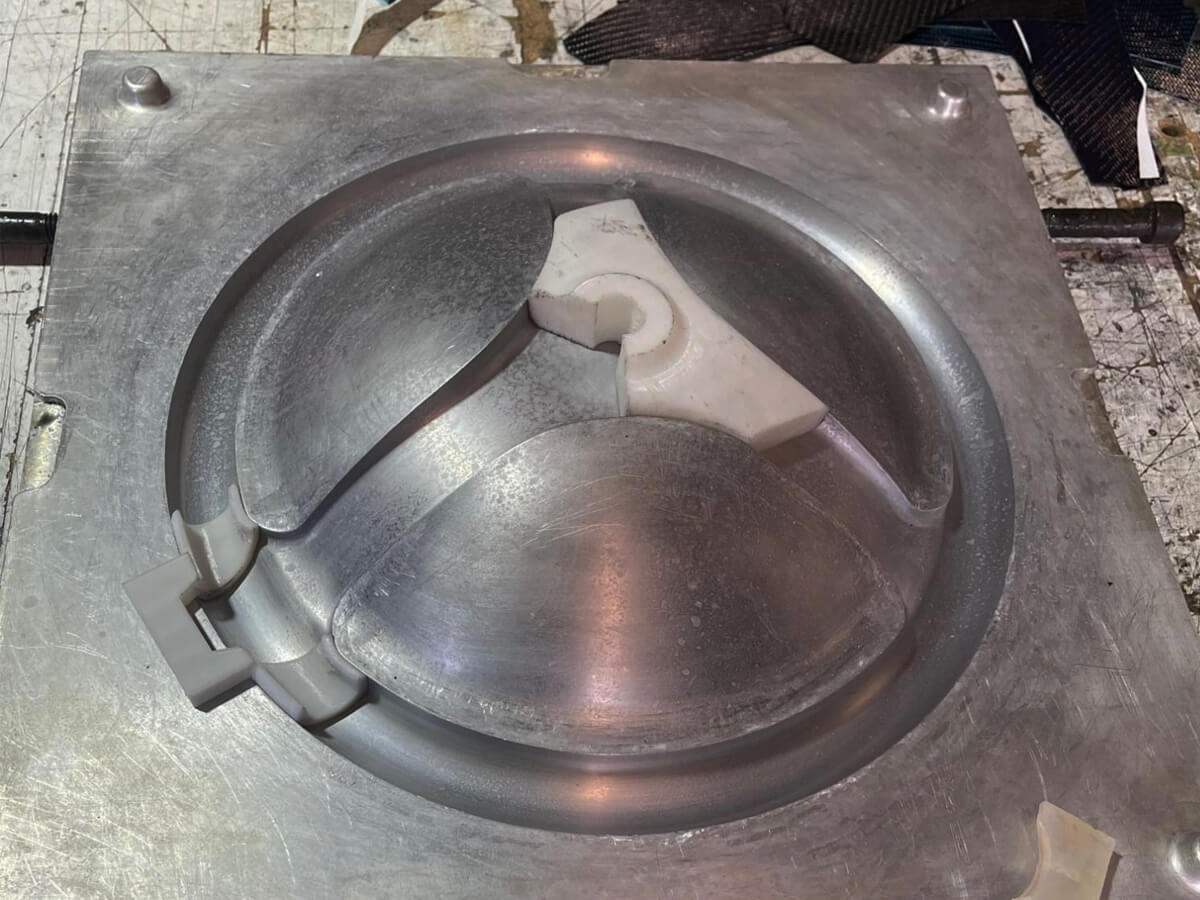
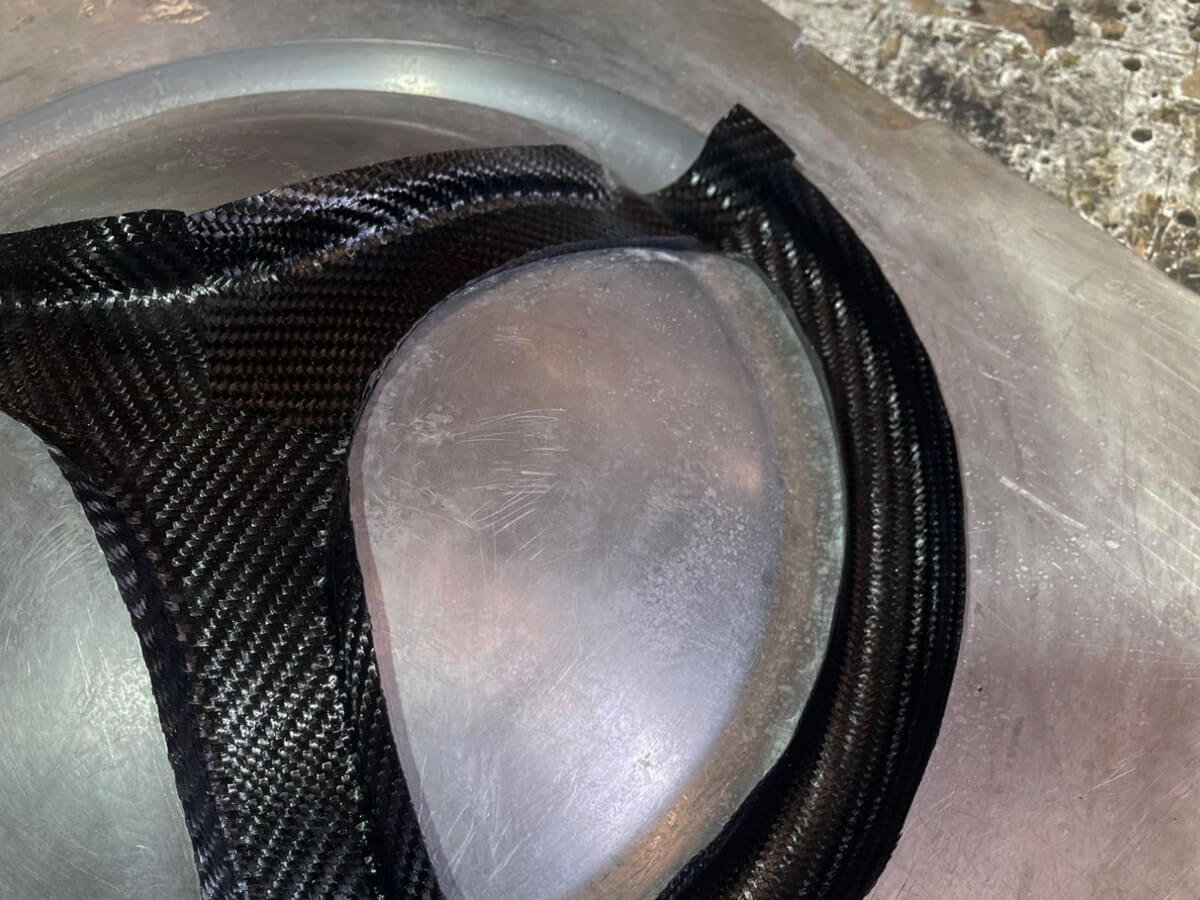
The wheel that did eventually pass was a different construction. The final product comprised two skin profiles made simultaneously in an aluminium tool with rubber trapped between. Once formed, the rubber was removed and the cavity packed with high-impact epoxy and unidirectional glass fibre. The weight difference between the Expancel wheel and this one was very noticeable, but it was not a concern to the client.
If it has to pass, make sure it passes first time
This was my first major client project, and most of what I did was hands-on: templates, prototype manufacture, sanding. It set a strong foundation for my composites work over my career and showed me the fastest way I could have learned how a carbon part actually comes together. The test rig was the first thing I built that had a number to hit, and it taught me something valuable, if you have to hit a certain spec or certification with a part do everything you can to make sure it passes first go. It can save a lot of time and money in the long run.
Read more
Read less
Proof from our own rig, then from the certifier
The wheel passed certification first time. It was sent away already knowing it would, because the in-house rig had shown it. The rig replicated the required impact energies by swinging a 20 kg silicon carbide bag from 800 and 1400 mm, giving 160 and 270 J, so we could test as many times as we needed before committing to the external test.
Read more
Read less
From a Sydney workshop to volume production in Thailand
The wheel passed NMMA and CE certification and went to market. The production process was transferred to Cobra International in Thailand, one of the largest composites manufacturers in the world. Introducing the product into the main production line involved a reciprocal trip for both the Cobra project team and us. Working with the Cobra team in our Brookvale workshop really opened my eyes to the capability and value in small teams being able to develop a product that could be passed to global mass manufacturers. The wheel is on sale now, and it's the first product you see on Schmitt Marine's homepage.
Read more
Read less
This project was a real starting point in my career. I learned the process of developing a product to scale, I designed my first production composite tooling, and built my first test rig.